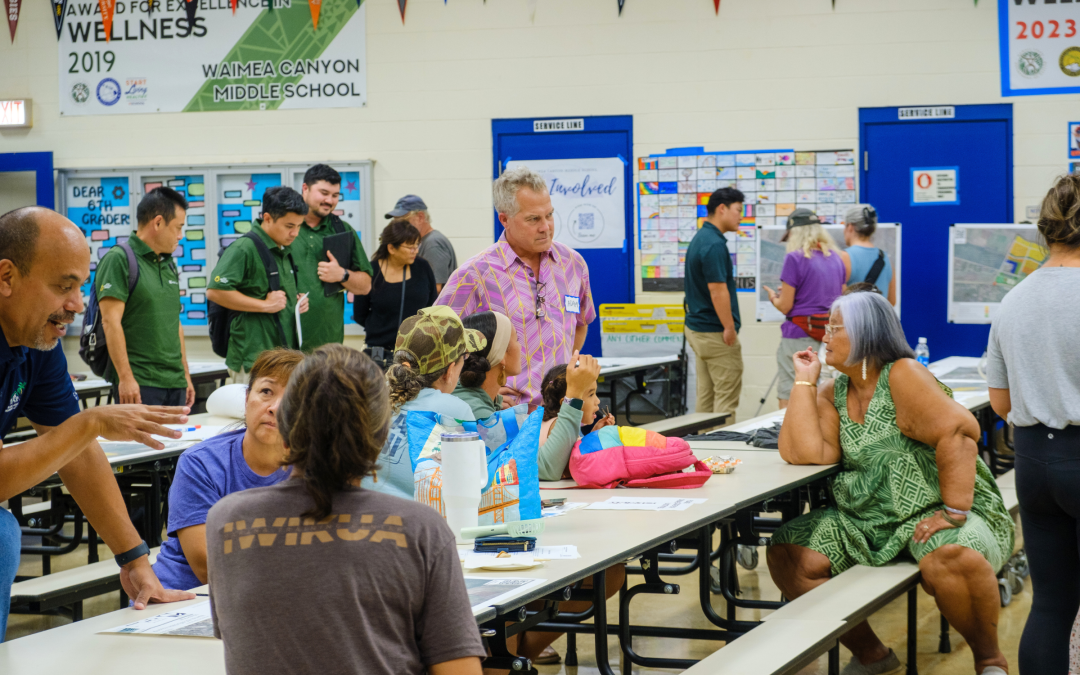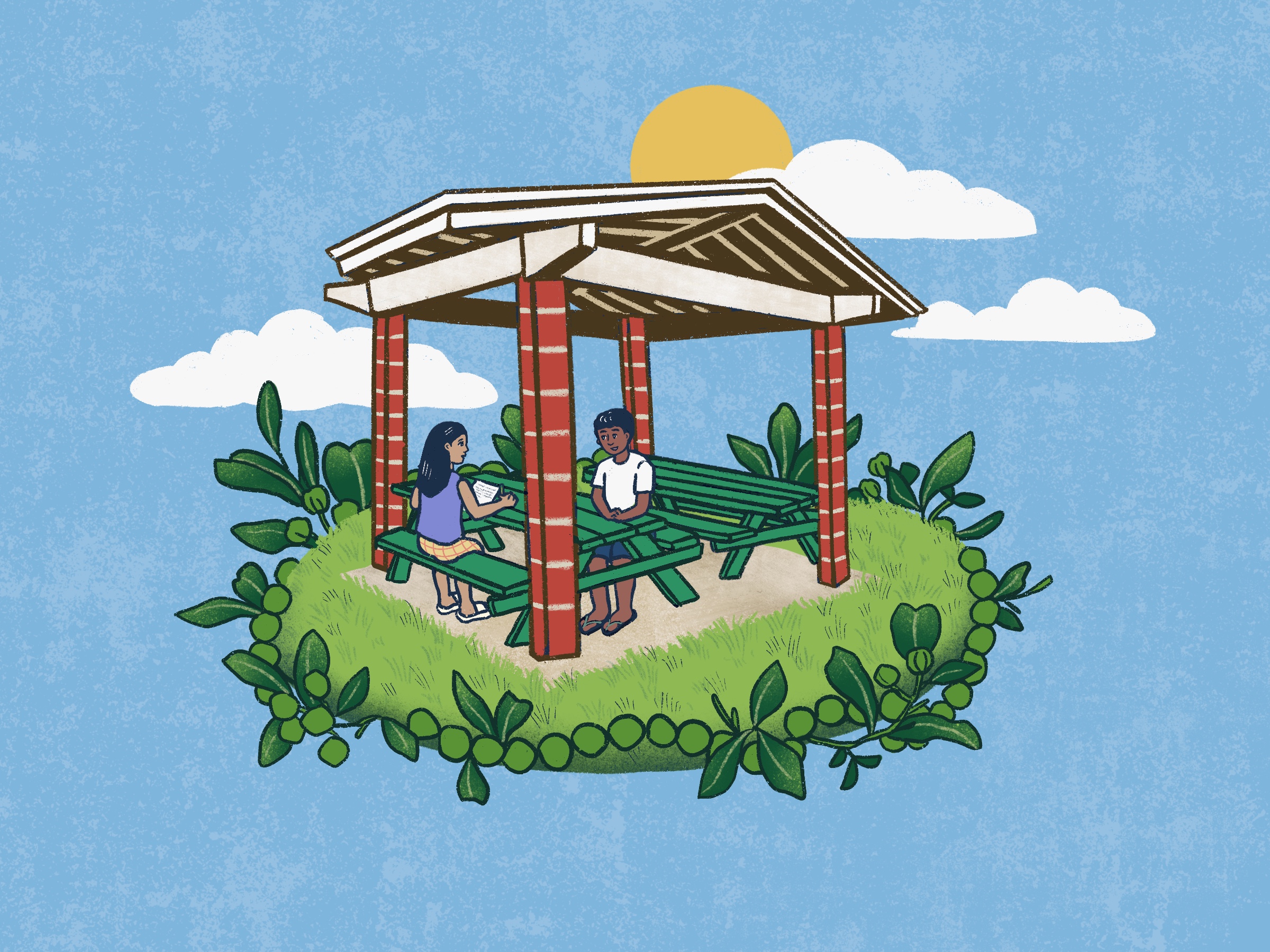
Lack of trust is one of the most common challenges facing journalism. That’s even more so for a new local newsroom, so we spent our early months engaging about 200 community members in conversations and through an online survey about how we can serve Hawai‘i.
They told us about the different issues and dynamics impacting them, what’s not working in existing media coverage, how they want journalism to be done differently, and the love and passion they have for the communities they’re part of.
Along the way, we learned about some of the numerous people and organizations that are trying to make a difference in their communities and how we can incorporate reciprocity and meaningful relationships into our practice as journalists and better authentically represent and be representative of Hawai‘i.
Here’s how our community listening is shaping our journalism:
Reporting on Systems and Solutions
The most common topics residents said they want to see reporting on are housing, environment and health, so we’ll cover these areas for our first year. Our goal is to be responsive to Hawai‘i residents’ information needs, and we’ll adapt our coverage as those needs change.
We’ll focus on in-depth reporting that emphasizes nuance and context. Hawai‘i is not immune from the polarization and divisiveness that has plagued the rest of the nation. Many community members told us they want to see reporting that helps encourage civil, thoughtful discourse.
Our reporting will seek to understand why things are the way they are and untangle the intersections between the patterns, systems and assumptions that shape Hawai‘i’s major challenges. This approach is grounded in our belief that journalism has a responsibility to foster better understanding and community connection.
At the same time, we want to look at how communities, individuals and organizations are responding to Hawai‘i’s challenges and finding ways to create systemic change in the Islands. Many residents told us they want stories that give them hope—that they and their keiki won’t be priced out and that Hawai‘i can reverse the outmigration of Native Hawaiians and kama‘āina.
It’s important to not just focus on the scary and bad stuff and just keep hope going.
Our Reporting Values
Hearing the hopes community members have for Hawai‘i’s future made us think about our purpose and values as a newsroom. LA Public Press, a nonprofit newsroom launched in 2022, explicitly states on its website what its journalism is in service of. We’ve taken a similar approach using what we heard during our community listening project.
Our journalism is in service of a more equitable and restorative Hawai‘i. We envision a Hawai‘i where Native Hawaiians and kama‘āina can afford to stay and thrive here; ‘Ōlelo Hawai‘i and Hawaiian culture are flourishing; Hawai‘i’s land, water and air are healthy and have meaningful, reciprocal relationships with the people who call these islands home; Native Hawaiian stewardship practices are abundant; and all residents have equitable access to privileges and opportunities.
Journalists are often told to distance themselves from the issues and people they cover. However, we approach our work with the mindset that we are also part of the communities we serve and we have a stake in seeing Hawai‘i thrive.
This doesn’t mean that we’ll be advocating for one side over another in our articles. Facts and accuracy remain our priority, and we are committed to integrity, editorial independence, fairness, transparency and democracy. You can read more about our journalism values and commitments on the Our Approach to Journalism page. Our editorial policies can be viewed here.
Hawai‘i needs a non-sensational, non-beholden-to-advertisers media outlet that is rooted in Hawai‘i and honors the Hawai‘i perspective, nuances, history and voices.
Better Representation
Another common comment we heard was that residents across the state felt that their communities weren’t accurately represented in existing news coverage.
Leeward O‘ahu residents told us their communities often only get coverage when bad things happen, which perpetuates a negative stereotype about the region and its people. “I root for the people who are proving the stereotypes wrong,” a Wai‘anae resident said.
One Maui resident said the neighbor islands get “the short end of the stick when it comes to news.” Like the rest of the country, Hawai‘i’s journalism industry has severely shrunk over the last decade, and the neighbor islands have seen severe reductions in local news coverage.
“Because it’s a news desert, I’m really sad that it’s essentially a disservice to our community,” a Maui resident said. News deserts are communities that have no or very limited access to local news. “Like that darkness is where we see democracy die. Like we could see so much more representation, so many important stories told, but because of a struggling industry, ultimately, our community suffers, and we don’t have those outlets.”
Our reporting will embrace the mindset that there’s a lot to be learned from all Hawai‘i’s communities, and we’ll especially be keeping an eye on the neighbor islands.
Likewise, we aim to incorporate an equity angle in all our stories. We strive to center the voices of those most impacted by policy, challenges and responses—and we especially want to know the impacts on communities that have been historically or actively discriminated against or marginalized.
Incorporating diverse voices means we’ll likely be talking with many people who have never been interviewed by journalists. We’ve created a guide that helps explain our reporting process and what to expect when approached for interviews; it’s available here.
I just think our community is not represented in local news at all, which is pretty sad. I think we’re just not represented at all.
Publication Schedule and Ongoing Conversations
We want to be thoughtful about how we add to the information ecosystem and not repeat what other local newsrooms are doing. We’re also a very small newsroom, starting out with one full-time journalist, and in-depth stories take weeks to produce, so we’ll have a much slower publication schedule than other local newsrooms. We plan to publish an article every other week and increase our frequency as we grow.
We welcome and will seek out reporting from freelance journalists, creatives and community members based across the state. Our long-term goal is to have at least one full-time reporter in each county. We know there are many more gaps that can be filled in Hawai‘i’s journalism industry, and we’ll be keeping an eye on them as we increase our capacity.
Our community listening project was inspired by Bay area newsrooms The Oaklandside, Richmondside, and El Timpano’s models of deep community listening. Most of our conversations were one-to-one, and we worked with a statewide team of community listening ambassadors who had experience or interest in journalism. Most of those ambassadors grew up in the communities they spoke with. We’ll be sharing more about what we learned from this project in the coming months. And our community conversations will continue throughout the year. We know that earning trust is a lengthy and continual process, and it will only happen when our journalists keep showing up.
We always welcome ideas and feedback on how Overstory can improve. Feel free to give us feedback here, or email me at noelle@overstoryhawaii.org. You can also send in story ideas, tips and questions via our Connect With Us page.
We look forward to hearing from you.
Funder disclosure:
This community listening project was supported by The Listening Post Collective.
A note on why we aren’t using community members’ names:
We normally grant anonymity for specific circumstances (you can read our policy here), but we made an exception for this community listening project. Our focus was on building relationships and getting to know people and communities, rather than reporting. We’ll be aggregating the information we collected and sharing back more key themes in the coming months.