
Mālama Kaua‘i
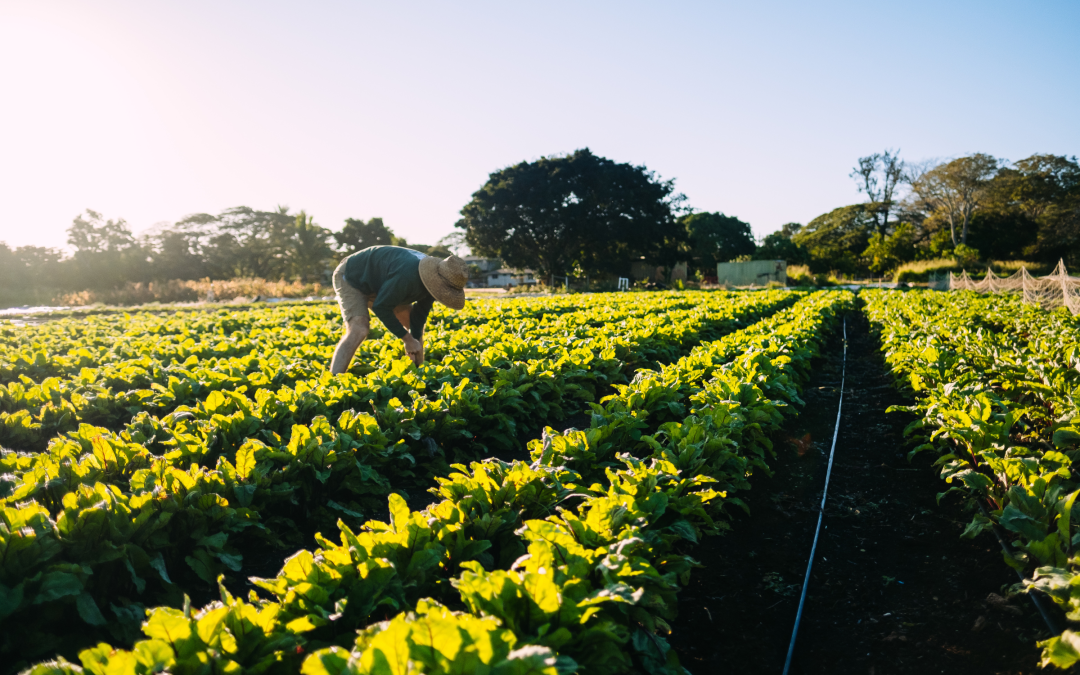
Founded in 2006, Mālama Kaua’i is a community-based, 501(c)3 nonprofit organization that focuses on increasing local food production and access for Kaua‘i.

GoFarm Hawai‘i

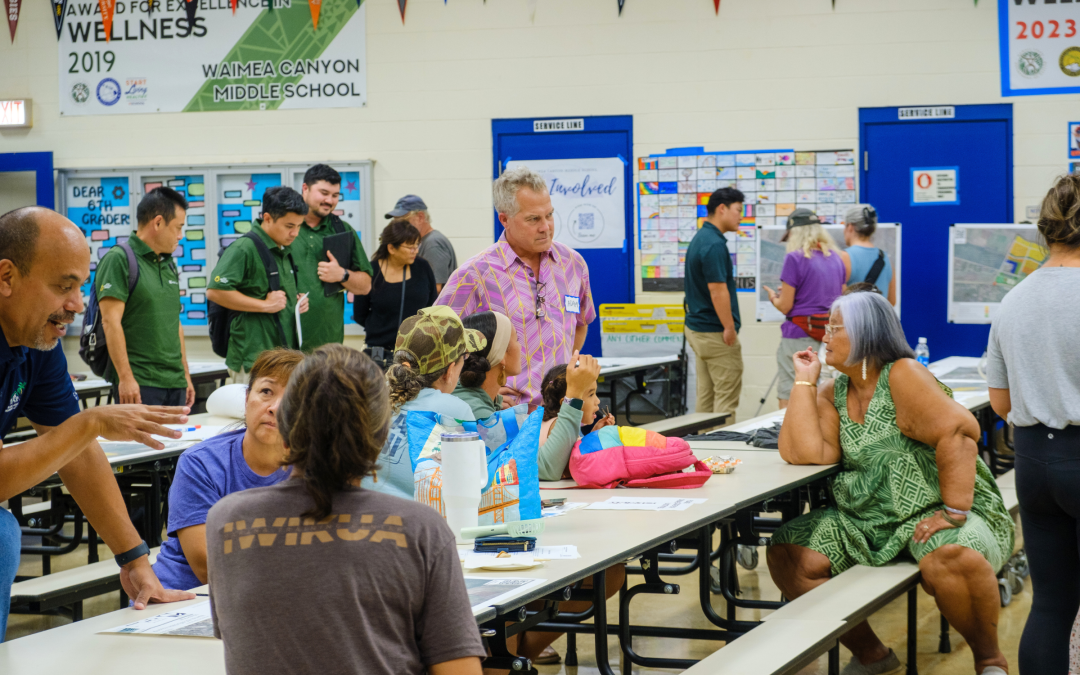
Iwikua
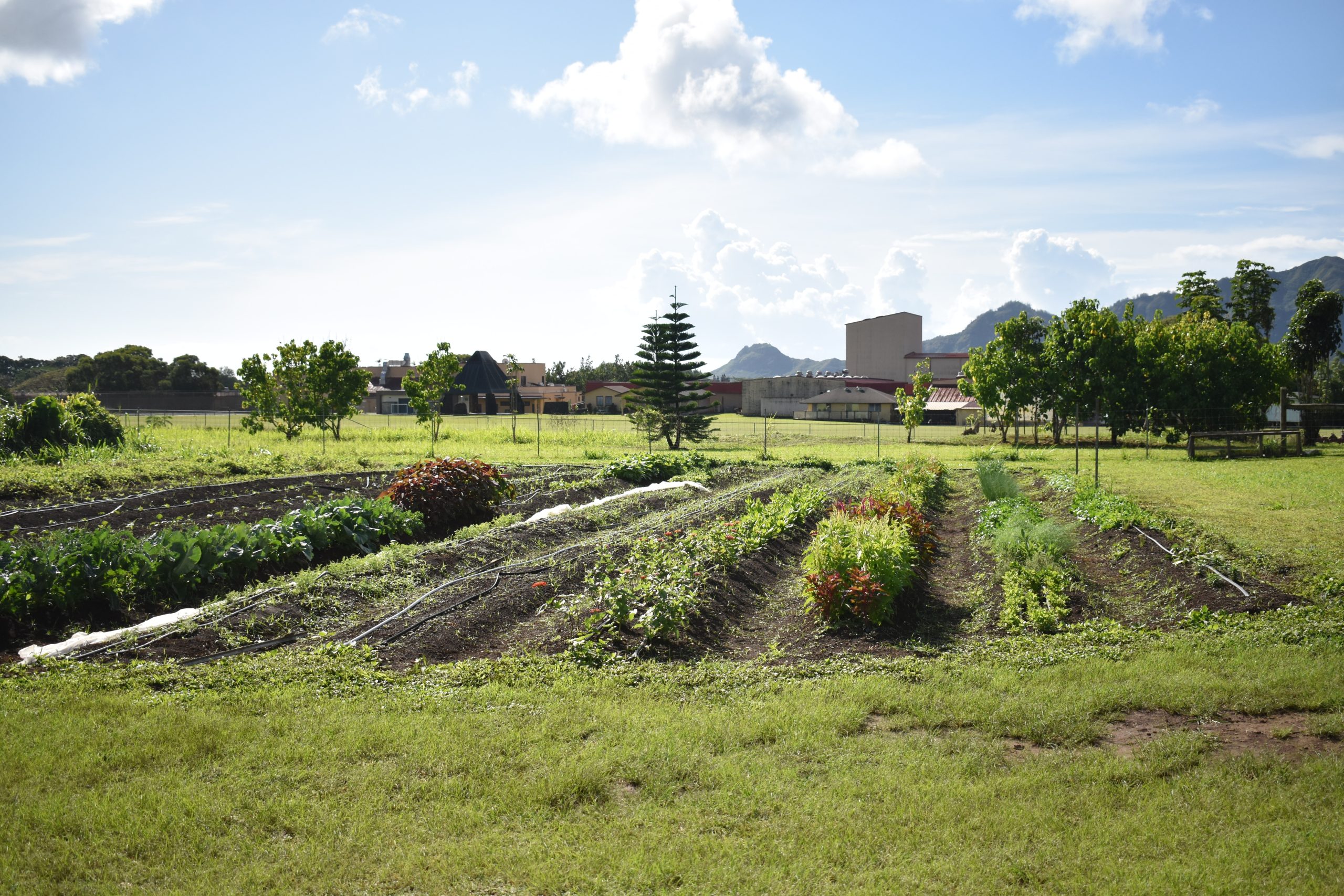
A nonprofit that aims to develop kama‘āina by empowering current and future generations to be culturally centered life-long learners and fulfill active roles in the community as teachers, leaders and farmers.
Corteva Agriscience
Corteva is an agricultural chemical and seed company that began its Hawai‘i operations as Pioneer Hi-Bred International in 1968. Today, Corteva utilizes modern biotechnology to develop and grow both conventional and genetically engineered corn seeds.

‘Āina Ho‘okupu o Kīlauea
A nonprofit that aims to facilitate solutions to economic, social and agricultural/food security challenges that the Kīlauea community and Kaua‘i faces.

Agribusiness Development Corporation
Created in 1994, the state Agribusiness Development Corporation is administratively attached to the Hawai‘i Department of Business, Economic Development and Tourism and governed by an 11-member board of directors. ADC’s role is to transition former plantation lands and water systems to diversified long-term agricultural use, initiate and develop diversified agriculture facilities, and find solutions for issues facing the agricultural industry.

Grove Farm
Headquartered in Līhu‘e, Grove Farm owns and manages 38,000 acres of Kaua‘i land, which include agricultural, residential, industrial and commercial lands.

Kekaha Agriculture Association
Established in 2003, the agricultural cooperative is made up of made up of Corteva, Hartung Brothers, Wines of Kauai and Sunrise Capital. It has an agreement with ADC to maintain and manage the common areas and infrastructure of the Kekaha Agricultural Lands.
The team at Mālama Kaua‘i, a nonprofit focused on increasing food production and access on Kaua‘i, spent a year reviewing over 1,000 acres of Wailua ranchland, looking for clear, flat areas near existing roads that weren’t covered in invasive trees and weren’t prone to flooding.
When they saw that the grass in an 87-acre area on Olohena Road stayed green even during the summer droughts, they knew it’d be the perfect site for their new agricultural park, which will provide long-term, sublicensed farm plots to small Kaua‘i farmers, plus shared facilities and an agroforestry project.
It’s one of several efforts that have been launched in recent years as Kaua‘i looks to help its farmers—especially those who are new and small—access arable land and strengthen its local food system.
“Land is expensive here,” said Jin-Wah Lau, Kaua‘i farm coach with the University of Hawai‘i’s statewide GoFarm Hawai‘i farmer training program. “I mean that’s been the challenge for ag for a long time, especially as there’s more expensive houses that are going in, and people can sell ag property for a lot more now. It’s pretty hard to make money on farming and have it pay for the cost of the land.”
Hawai‘i was self-sufficient for centuries before Western contact, with Native Hawaiians living off fishing and farming. After Westerners arrived, large tracts of farmland were transformed into sugar and pineapple plantations that primarily exported their products. Despite this long agricultural history, Hawai‘i currently imports about 85% to 90% of its food.
The state’s goal is to at least double its local food production by 2030. Yet on Kaua‘i, the number of operating farms has decreased by 32% since 2017; these farms altogether comprise nearly 13% less total acreage, according to the U.S. Department of Agriculture’s (USDA) latest agriculture census in 2022. Some local experts note that the census doesn’t capture everyone who farms—particularly subsistence farmers and those who grow food to trade with their neighbors rather than sell commercially—but it remains the most comprehensive dataset available.
Kaua‘i farmers, like their colleagues on other islands, face a multitude of challenges, including rising operating expenses, climate change, a lack of processing facilities and invasive species destroying crops. But long-term access to farmable, leasable land with available water and other infrastructure has long been a major barrier.
“It all goes back to having the land and water resources for the opportunity to farm and, to me, that is the crux of the problem,” said Adam Asquith, a Kaua‘i kalo farmer. “So if that’s your primary question about limits to entry [for] new farmers and growing farms, that’s pretty that’s pretty much what it is.”
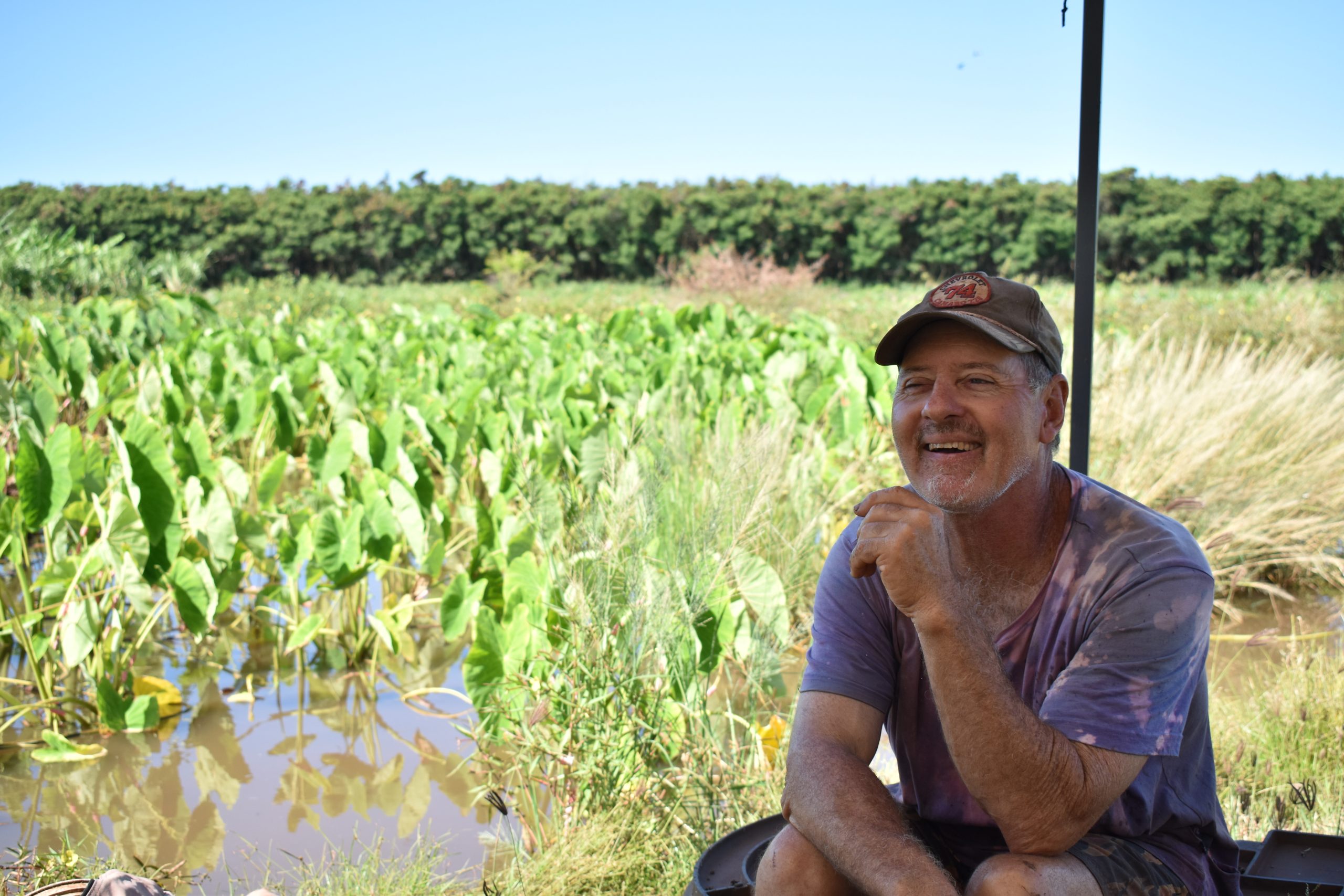
Raised on a farm in the Midwest, Adam Asquith, owner of Kauai Taro Co., came to Kaua‘i while working for the U.S. Fish and Wildlife Service. He served as a liaison for kalo farmers on federal land in Hanalei and became so enamored and humbled by their work that he made the switch to farming. In his 20 years farming on the island, he said he’s chased land and water from Hanalei to Kekaha. | Noelle Fujii-Oride, Overstory
I’m actually kind of heartened by the fact that there are so many people and so many agencies trying to support and direct smaller agricultural production, because that’s really where our food production is going to come from.
Chasing Land and Water
On Kaua‘i’s West side, Waimea farmer Josh Mori has made it his mission to help feed his moku of Kona. A Moloka‘i native, Mori began farming on Kaua‘i about eight years ago and runs a nonprofit, called Iwikua, focused on community wellness. But helping to feed his community was more difficult than expected as he struggled during his early years to find a long-term home for his farm.
He’s had to move his farm five times. He’s been able to stay in the West Kaua‘i area, but each move required him to start from scratch, figuring out which crops work best for each area.
For the last three moves, he’s also had to take down and rebuilding his aquaponics system, which today includes three tanks that together hold 6,000 fish. And his latest move meant downsizing from 10 acres in Hanapēpē to one acre on Waimea High School’s campus.
“You pivot,” he said. “Our whole thing has never been about making money. We’re a nonprofit, so it’s been about getting food to the community.”
He remains committed to that mission and has been farming at Waimea High School for almost four years now, teaching students about aquaponic and traditional farming techniques. He’s also helping a charter school set up an aquaponic farm and working with West Kaua‘i residents from Ni‘ihau start their own gardens, trying to encourage community members to build relationships with locally grown food.
A few miles west in Kekaha, Asquith, the owner of Kauai Taro Co., grows kalo on about eight acres of land overseen by crop seed company Corteva Agriscience. He said he’s made hundreds of lo‘i over the 20 years he’s been farming because he’s moved so many times.
“I’ve chased land and water and planted literally from, now, Kekaha to Hanalei and everywhere in between,” he said.
Raised on a farm in the Midwest, Asquith came to Kaua‘i while working for the U.S. Fish and Wildlife Service. He served as a liaison for kalo farmers on federal land in Hanalei and became so enamored and humbled by their work that he made the switch to farming. He said he’s never been in one place long enough for his startup investment to be fully returned to him.
At each new location, he installs his own fencing and PVC pipe for irrigation and grades the area so his lo‘i are level. That process can take a year and a half, plus another nine months or longer before he can start harvesting his kalo.
Even after putting in a large financial investment up front, it’ll take about two years before he’ll see cash flow from his harvests. He previously farmed in Kealia on Kaua‘i’s East side for 15 years, and he said it took that long for him to recoup his initial investment.
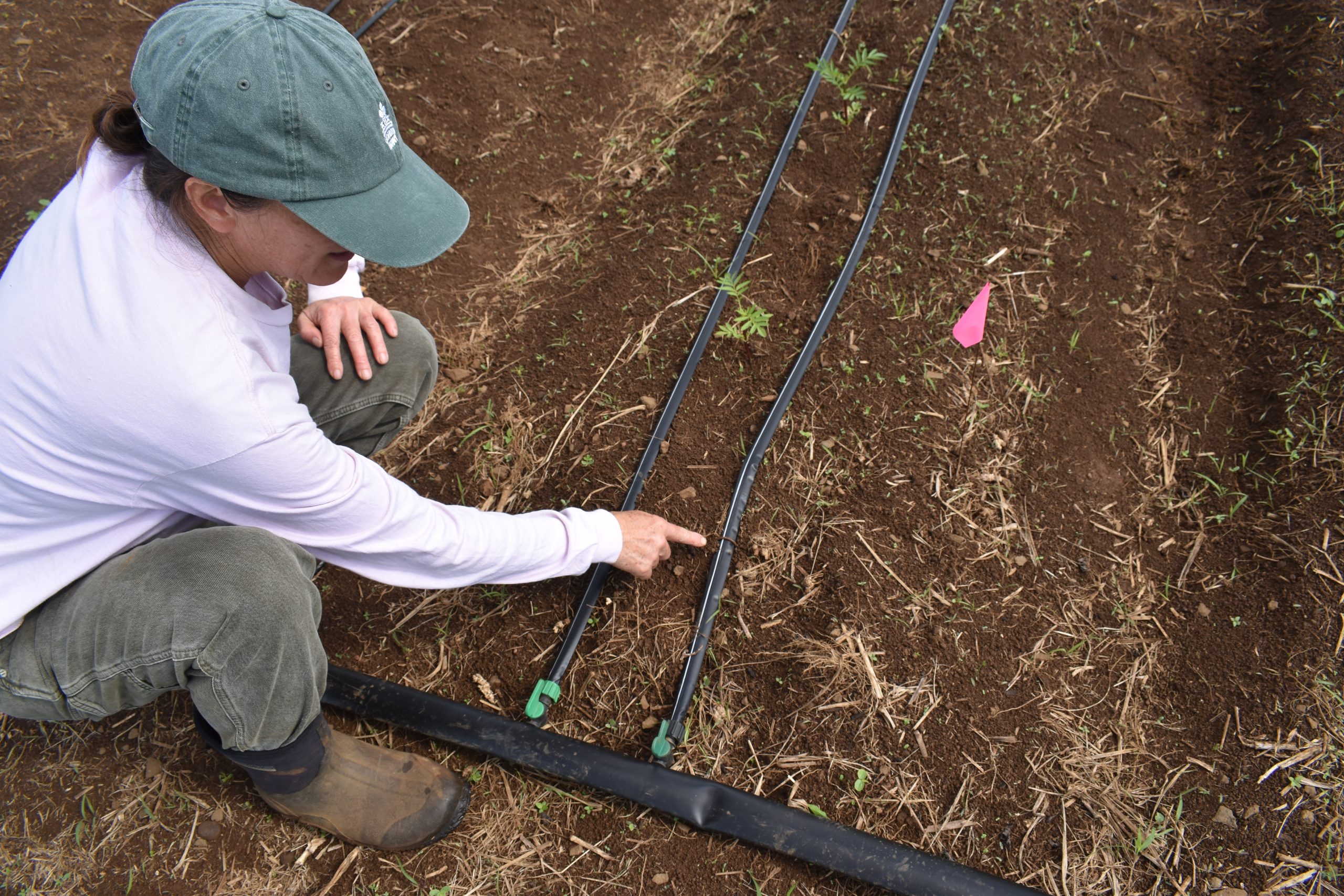
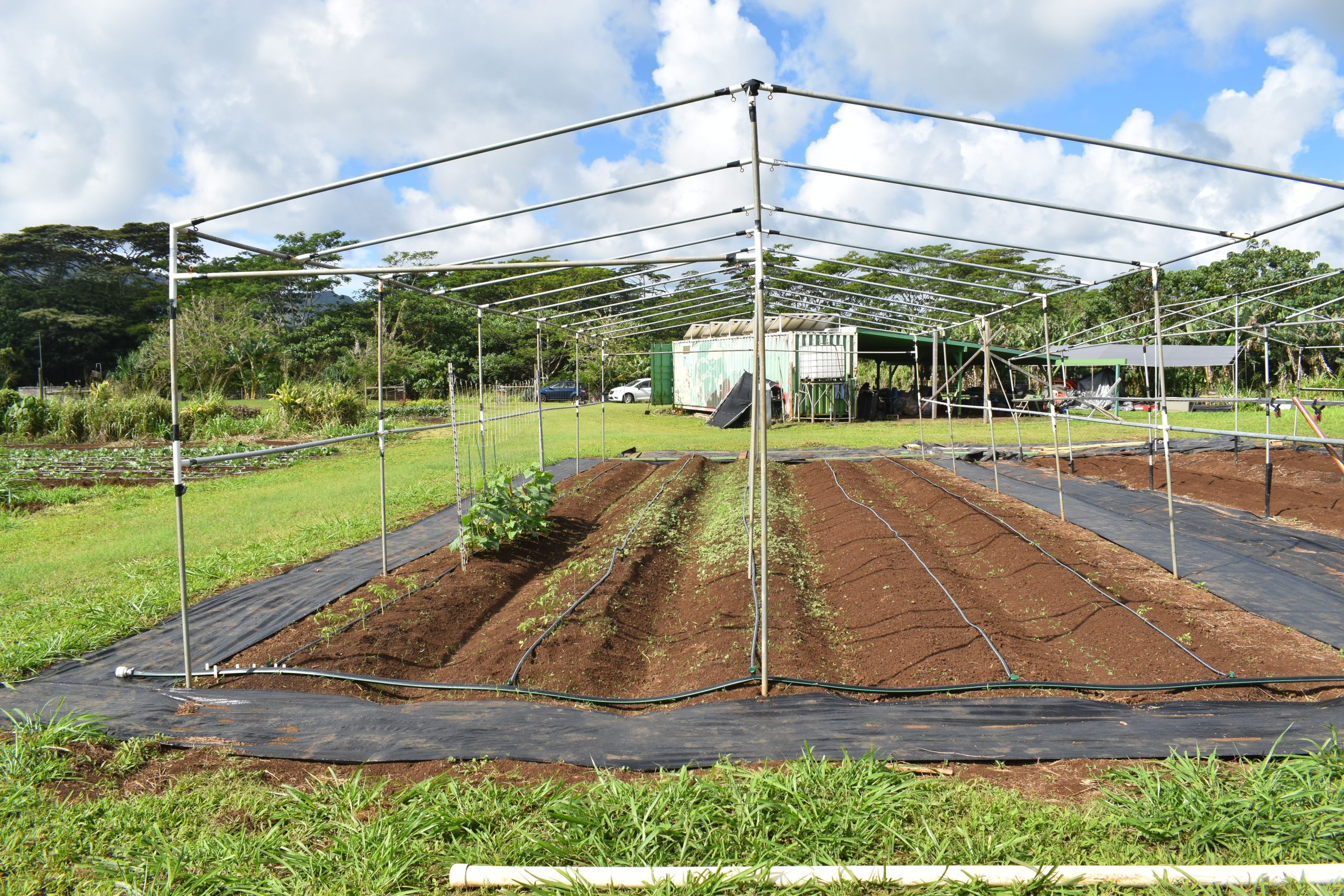
Left: Jin-Wah Lau, Kaua‘i farm coach for GoFarm Hawai‘i, points to the irrigation lines on her class’s field. The program’s site gets its water from a nearby plantation-era ditch, so students learn how to check the filters on the site’s pump stations and get a feel for the area’s water availability. Each of her six students will manage 1/16th of an acre to grow and then sell their own crops. Right: The Līhu‘e site also teaches students how to grow produce in shade houses, which help protect against pests. | Noelle Fujii-Oride, Overstory
Need for Long-Term Land Leases
Most Kaua‘i farmers own their farmland, according to the USDA’s latest agricultural census in 2022. But when Mālama Kaua‘i survyed farmers and ranchers in 2017, it found that most who own their land are either transplants or are beneficiaries living on state Department of Hawaiian Home Lands agricultural lots, said Megan Fox, the nonprofit’s executive director. With agricultural lands becoming more expensive, Asquith said the door has pretty much closed for small farm ownership of farmland on the island.
Long-term land leases is a major objective of Mālama Kaua‘i’s 2030 Kaua‘i Food Access Plan. Most leases are up to five years, but farmers really need 10 to 25 years for their investments to pay off. And Fox said month-to-month agreements are also common, so they can be evicted any time.
If a farmer has a short or uncertain lease term, it’s risky to plant crops with longer growth cycles. For example, orchards are relatively easy to maintain for small farmers, but fruit trees can take several years before they start bearing fruit that a farmer can harvest and sell.
“You got to wait so long, and then the land tenure just doesn’t even incentivize you to do that,” Asquith said.
About 62% of Kaua‘i’s farms operate on less than 10 acres, according to the USDA’s 2022 agricultural census. It’s especially challenging to find leasable land under five acres, said Camille PakChong, owner of Rainbow Roots Farm in Līhu‘e. She’s also vice president of the Hawai‘i Farmers Union United Kaua‘i chapter and works as a coordinator for two Mālama Kaua‘i programs.
“To not have access to land, or to have to pay an arm or a leg for land access is really the biggest challenge for small farmers, especially Native Hawaiian farmers,” she said.
Lau of GoFarm Hawai‘i said her program regularly shares land opportunities it hears about with its alumni and graduates and helps them review lease agreements. GoFarm recently matched a Kaua‘i graduate with Corteva Agriscience, which is letting independent farmers use some of its shade houses in Waimea. Lau said the program is in the process of matching another Kaua‘i graduate with a large farm that is opening space it doesn’t use anymore.
GoFarm teaches beginner farmers about crop production and business planning. On Kaua‘i, 105 participants have graduated from the program’s six-month AgExcel course, during which they manage their own 2,500-square-foot vegetable plot. Since 2019, 83% of those graduates have either started or expanded their own farms or gone onto GoFarm’s AgIncubator program, which helps participants start independent businesses on land provided by the program for up to three years.
Lau said she’s seeing more land opportunities become available as people realize that small farmers need support: “I’m pretty excited about Mālama Kaua‘i’s new land option,” she said. “I know some of my students are pretty excited on the east side too.”
We basically set up everything from the infrastructure and the land and all that kind of stuff, all the way through to the demand with, like, the retail store, the produce boxes and things like that, so people can show up, basically pay a monthly lease fee and then have pretty much everything that they need in order to hopefully be successful small farmers.”
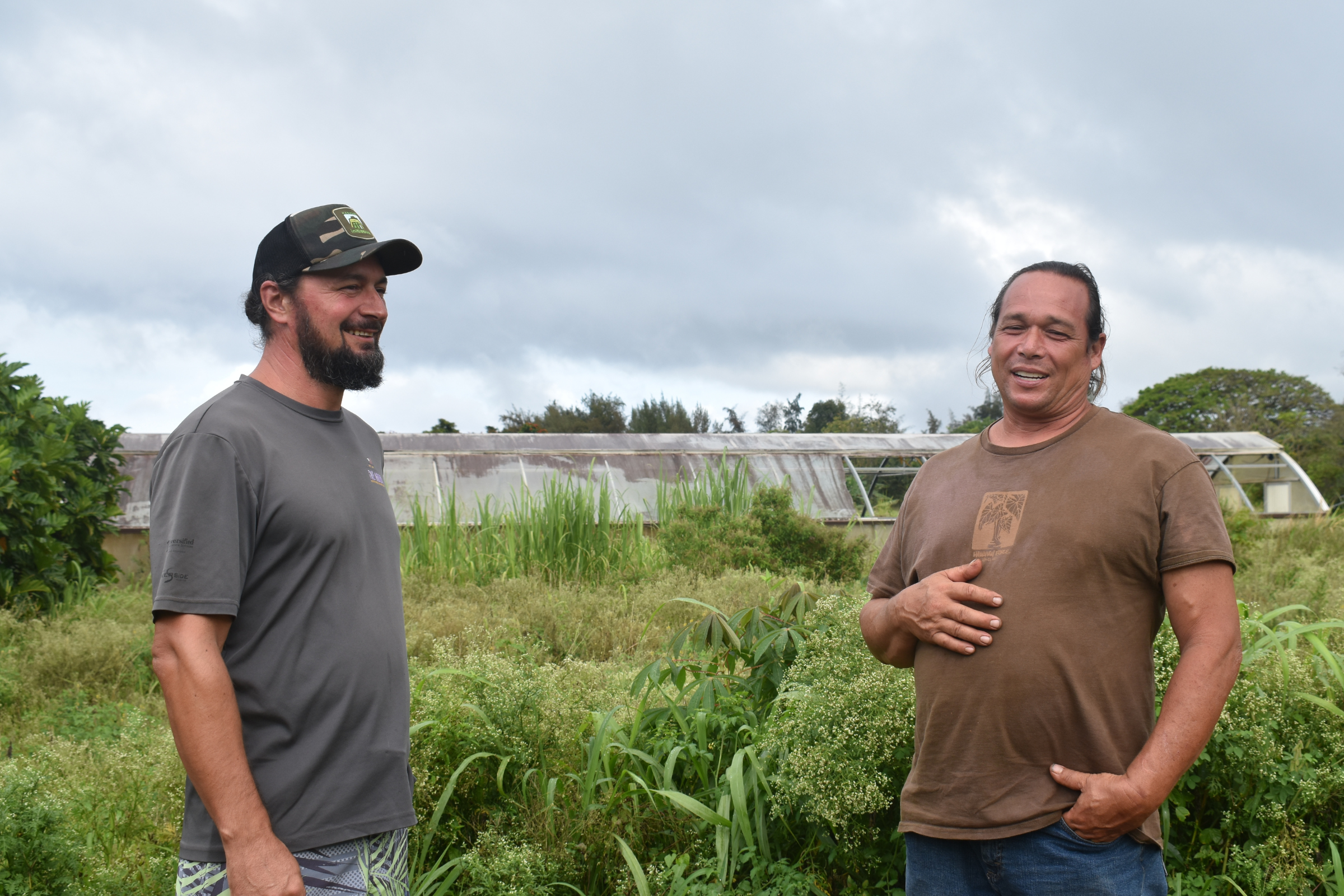
Jeremy Burns (left), administrative director, and Yoshito L‘Hote (right), executive director, of ‘Āina Ho‘okupu o Kīlauea. The creation of the nonprofit’s Kīlauea Community Agricultural Center resulted from a 30-year community effort to prevent further development of gentlemen’s farms (high-value residences on agricultural land with little to no farming). | Noelle Fujii-Oride, Overstory
Agricultural Parks and Centers
The initial phase of Mālama Kaua‘i’s 87-acre Olohena ‘ĀINA Center will comprise 20 acres of sublicensed farm plots for farmers who want smaller, half-acre or one-acre parcels, plus a four-acre agroforestry project and one-acre of shared facilities. It’ll also have a washing and packing area, greenhouses, cold storage, and a business and meeting space, so farmers can share resources and equipment.
The park’s remaining 62 acres will be developed in subsequent phases, and Fox said the nonprofit is looking at potentially offering larger plots, such as up to 10 acres, in those phases.
Fox wants to give independent farmers a chance to put down roots by offering them the same remaining lease length Mālama Kaua‘i has with the landowner, My Kapa‘a LLC, a company partly owned by Honolulu-born actress and singer Bette Midler. Mālama Kaua‘i signed a 12-year lease with the landowner this spring.
Rates would be affordable, though Fox said the exact amounts won’t be known until the nonprofit identifies how it’ll bring water to the site and the costs of operating it.
Lease prices on Kaua‘i can vary widely. Fox said Mālama Kaua‘i has heard that large landowners, whose parcels start at dozens of acres, charge yearly rates of $400 to $600 an acre, while smaller landowners charge monthly rates of $400 to $600 an acre.
The state Agribusiness Development Corporation (ADC) currently charges about $700 an acre per year in Kekaha, said Mike Faye, manager of the Kekaha Agriculture Association. That’s inclusive of a $550 per acre common infrastructure fee, which covers water. The cooperative maintains the agricultural infrastructure on the ADC’s Kekaha lands.
The ‘Olohena ‘ĀINA Center model follows that of the state Department of Agriculture’s (DOA) agricultural parks and the 75-acre Kīlauea Community Agricultural Center, both of which target smaller farmers. The DOA’s agricultural parks provide 15- to 45-year leases for small farming enterprises under 20 acres.
Nonprofit ‘Āina Ho‘okupu o Kīlauea runs the Kīlauea Community Agricultural Center on county-owned land. The nonprofit so far uses 20 acres for growing crops and raising chickens, turkeys, ducks, pigs and sheep. About five of those acres are licensed to a handful of independent farmers who work on plots ranging from a quarter acre to one and a half acres.
“If you have 1,000 acres, you go five acres at a time, that’s a lot of farmers (large landowners) got to deal with and they’re going to call you at night and ask for this and ask for that,” said Yoshito L’Hote, executive director of ‘Āina Ho‘okupu o Kīlauea. “That’s where the function of an ag center, you can become that catalyst. And you take the 50 and then you make 10 farmers happy.”
Jeremy Burns, the nonprofit’s administrative director, said the agricultural center didn’t see an uptick in interest from independent farmers until after the pandemic, when ‘Āina Ho‘okupu o Kīlauea began distributing produce boxes and put in a bigger wash station, expanded its mainline irrigation, and bought a tractor, excavator, skid steer and other major farming implements.
The goal was to put all the pieces in place so that residents with a serious interest in farming could grow their businesses enough to move onto larger parcels elsewhere. ‘Āina Ho‘okupu o Kīlauea opened its retail store, Johnny’s Market, in 2023 to provide another sales channel for produce grown in the agricultural center.
“We basically set up everything from the infrastructure and the land and all that kind of stuff, all the way through to the demand with, like, the retail store, the produce boxes and things like that, so people can show up, basically pay a monthly lease fee and then have pretty much everything that they need in order to hopefully be successful small farmers,” Burns said.
Today, the nonprofit and the center’s independent farmers produce about 3,000 pounds of produce a week. And the plan is to continue growing the retail store and get more residents interested in farming on the land.
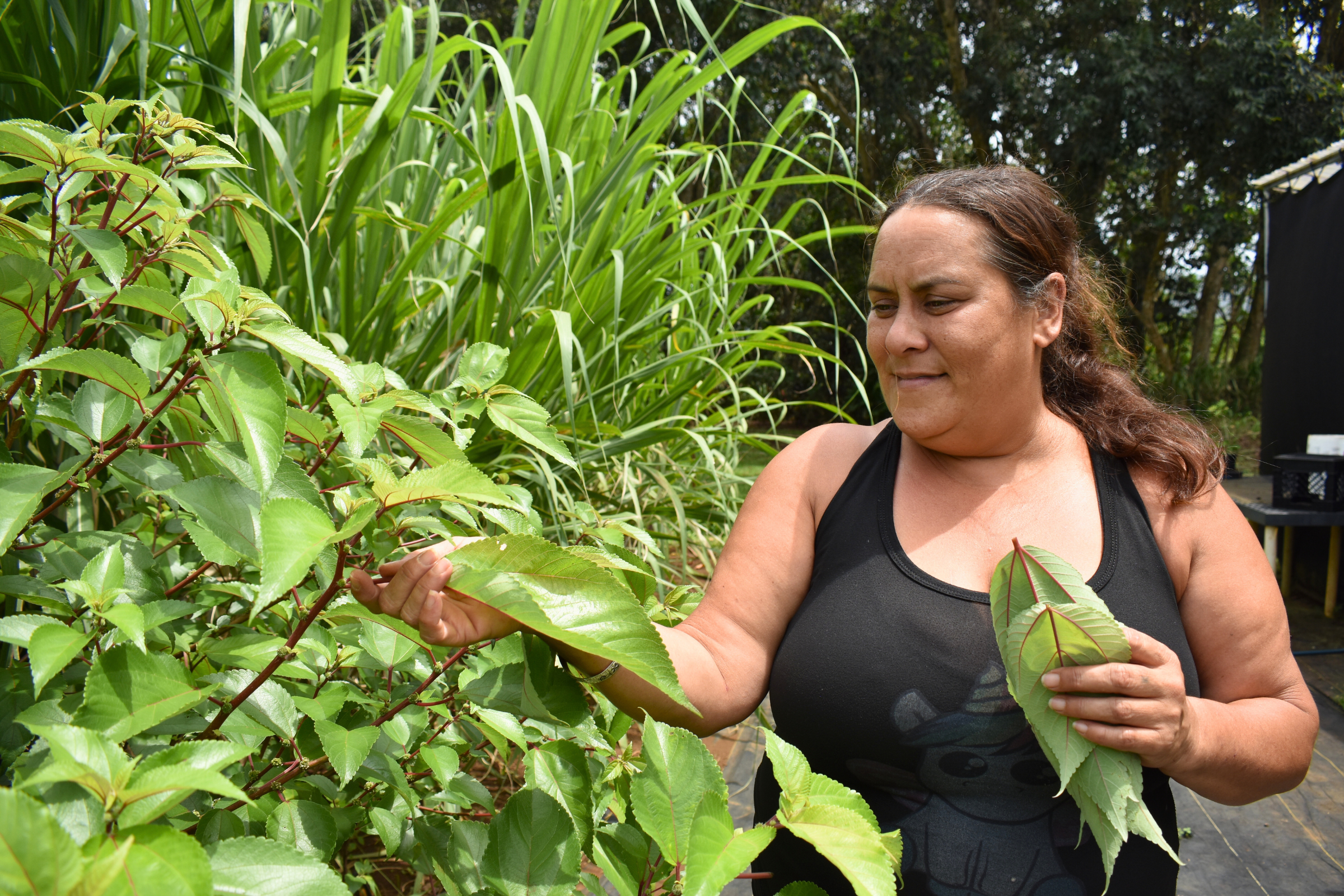
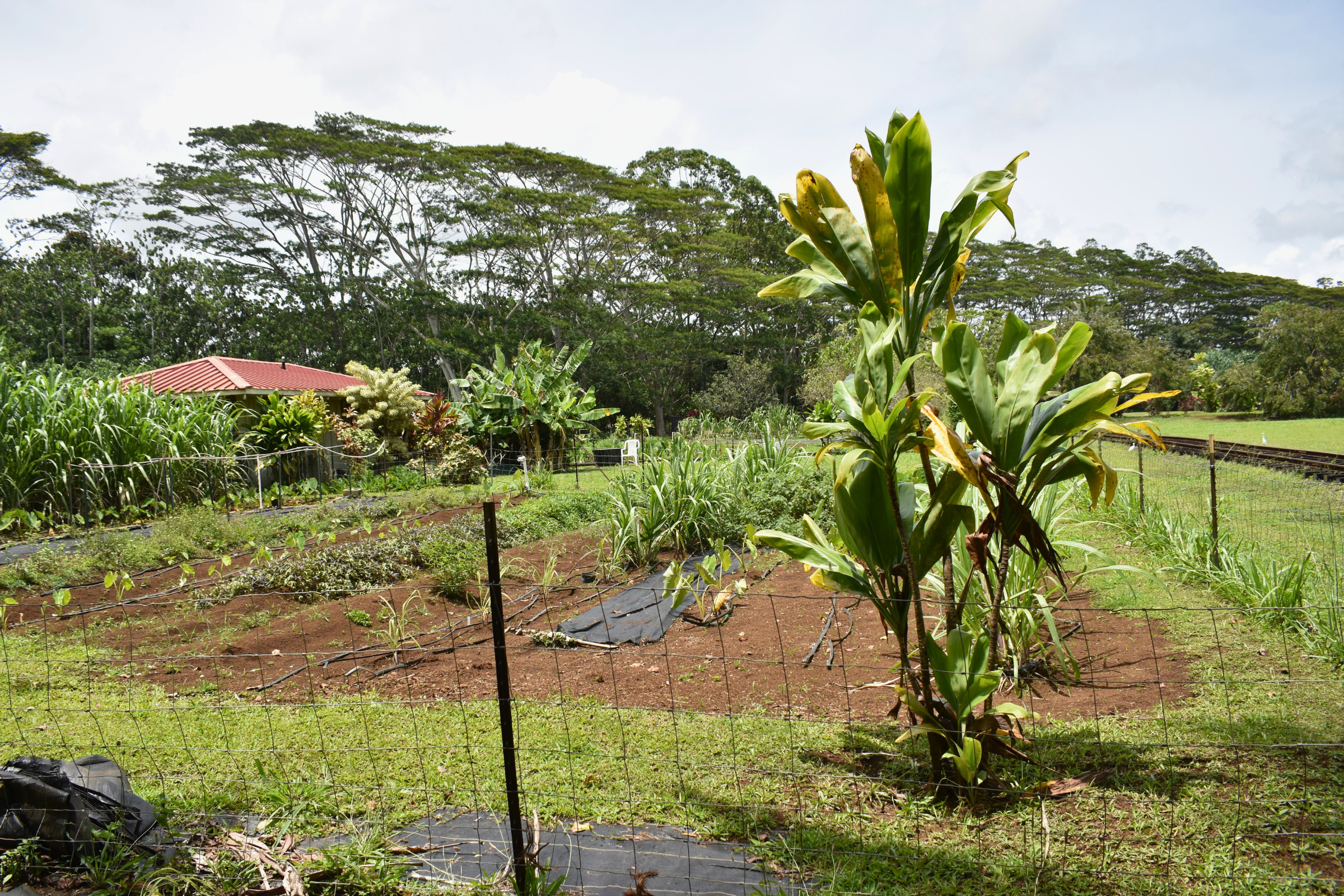
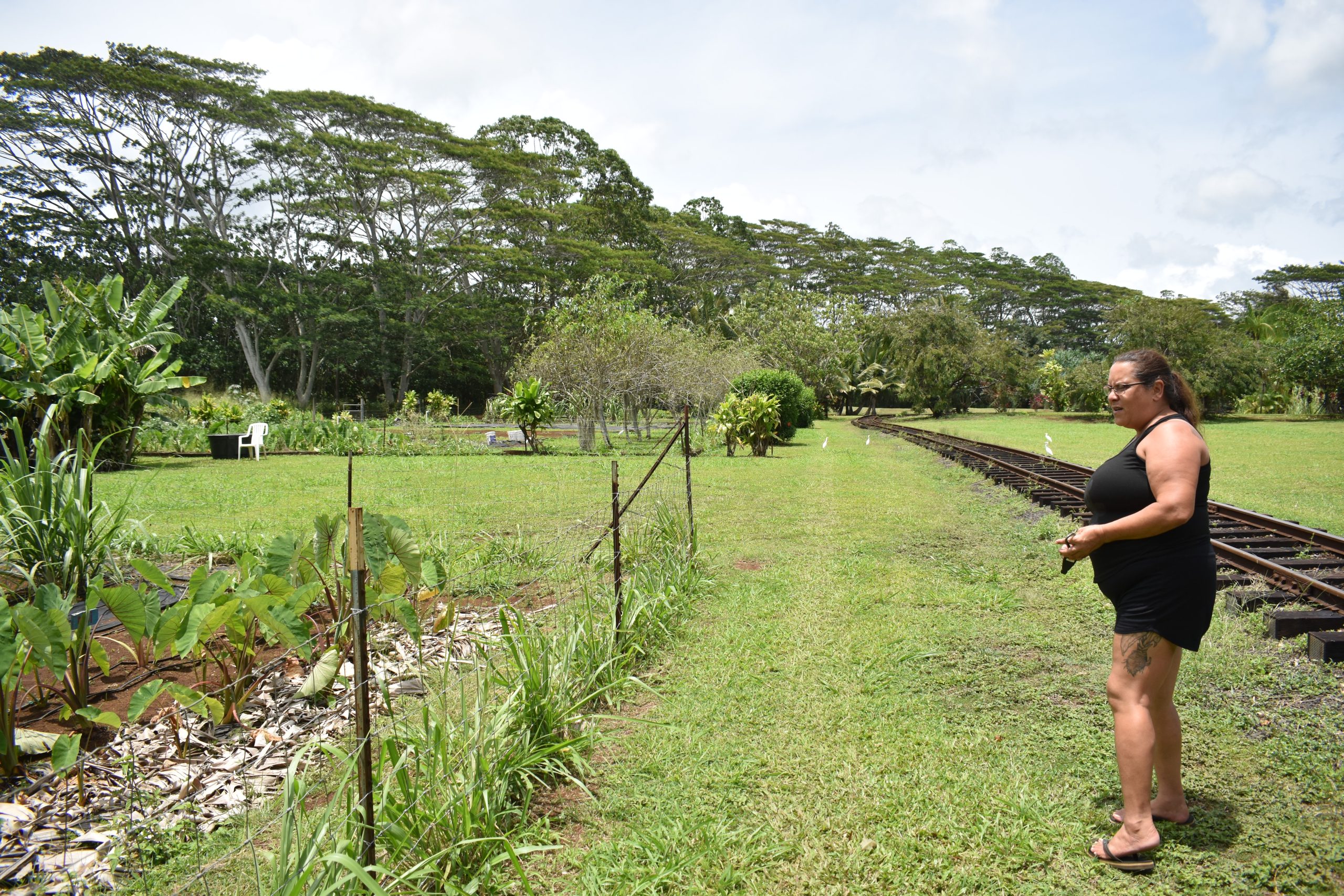
Camille PakChong, owner of Rainbow Roots Farm, grew up in a rural, northeast Maui community and pivoted from a career in commercial building maintenance to farming about six years ago. Working with the land offered a more positive, reciprocal relationship: it gave her a sense of purpose and fulfillment that she didn’t feel in her previous career. | Noelle Fujii-Oride, Overstory
Land and Water at No Cost
PakChong’s truck rumbles as she drives into the heart of Līhu‘e’s 105-acre Kilohana Plantation. Along the way, she passes several lo‘i kalo and groves of mango, banana and papaya trees before pulling up next to a small, tan hale with a red roof.
She grew up in a rural, northeast Maui community and pivoted from a career in commercial building maintenance to farming about six years ago. Working with the land offered a more positive, reciprocal relationship: it gave her a sense of purpose and fulfillment that she didn’t feel in her previous career.
She graduated from GoFarm’s Kaua‘i farmer training program and moved into her one-acre space at Kilohana Plantation in March 2020. She said finding this location was serendipitous. She put the word out to friends that she was looking for a new space, and one of them was moving on from Kilohana Plantation.
It took her a little under a year to clear away the trees, dig trenches for her lo‘i kalo, install irrigation, and set up her fields to grow kō, uala, beans, carrots, tomatoes, cucumbers and berries. She also raises chickens for eggs. The plantation provides the land and water at no cost to her—those savings have helped her stabilize her farm and now she’s looking to grow.
“We need more of this,” she said. “We need free access to land and water for farmers if you want them to be successful because, I mean, just the initial investment to start up a farm is already crazy.”
That’s a sentiment that Corteva Agriscience shares. The company farms on about 1,000 acres on Kaua‘i, about 700 of which are in Kekaha and Waimea and leased from the ADC. For the last four years, the company has allowed independent farmers to use a 35-acre field in Kekaha—called Field 107—and a dozen 30-feet-by-96-feet shade houses in Waimea that it no longer uses.
Mark Stoutemyer, Corteva’s Hawai‘i Research Center lead, said the company provides the land, shade houses, water and fencing at no cost to the independent farmers. Corteva staff will also help the farmers grade the land and do soil and leaf tissue analyses to see what fertilizers may be needed and to identify any plant diseases or pests.
The idea is to help incubate the farmers for several years so they can grow their business to the point where they’ll be able to access ADC lands. ADC has 49 ag land leases on Kaua‘i, according to Wendy Gady, executive director of ADC. Parcels range from 10 to 15 acres all the way up to 2,000 acres, and lease terms can range from three to 35 years. ADC generally prefers that applicants have more than five years of farming experience because it wants farmers who will help scale local food supply for the islands.
Asquith, the owner of Kauai Taro Co., moved his farm to Corteva’s Field 107 after the Kealia location he farmed for 15 years was sold to a new owner who didn’t want any encumbrances.
The Kekaha field is ideal, he said, because the area was once home to lo‘i kalo before sugar cane began being grown commercially. The space has enabled him to maintain a steady harvest for his processing partners to turn into kūlolo and poi. He was recently approved for an ADC lease and said he’s looking at a nearby 100-acre parcel to expand his kalo production and potentially have a small space for the adjacent residential community to come garden.
“I’m actually kind of heartened by the fact that there are so many people and so many agencies trying to support and direct smaller agricultural production, because that’s really where our food production is going to come from, and this land has so much potential,” Asquith said.
Stoutemyer said that all types of farm and agricultural operations need to be working together for the industry to thrive here.
“It’s all intertwined in a way that if we can all pull together in the same direction, Hawai‘i is going to be better off with more food production, lower costs for farmers, farmers will be more profitable, and then you’ll attract the next generation to be interested in doing it,” he said.
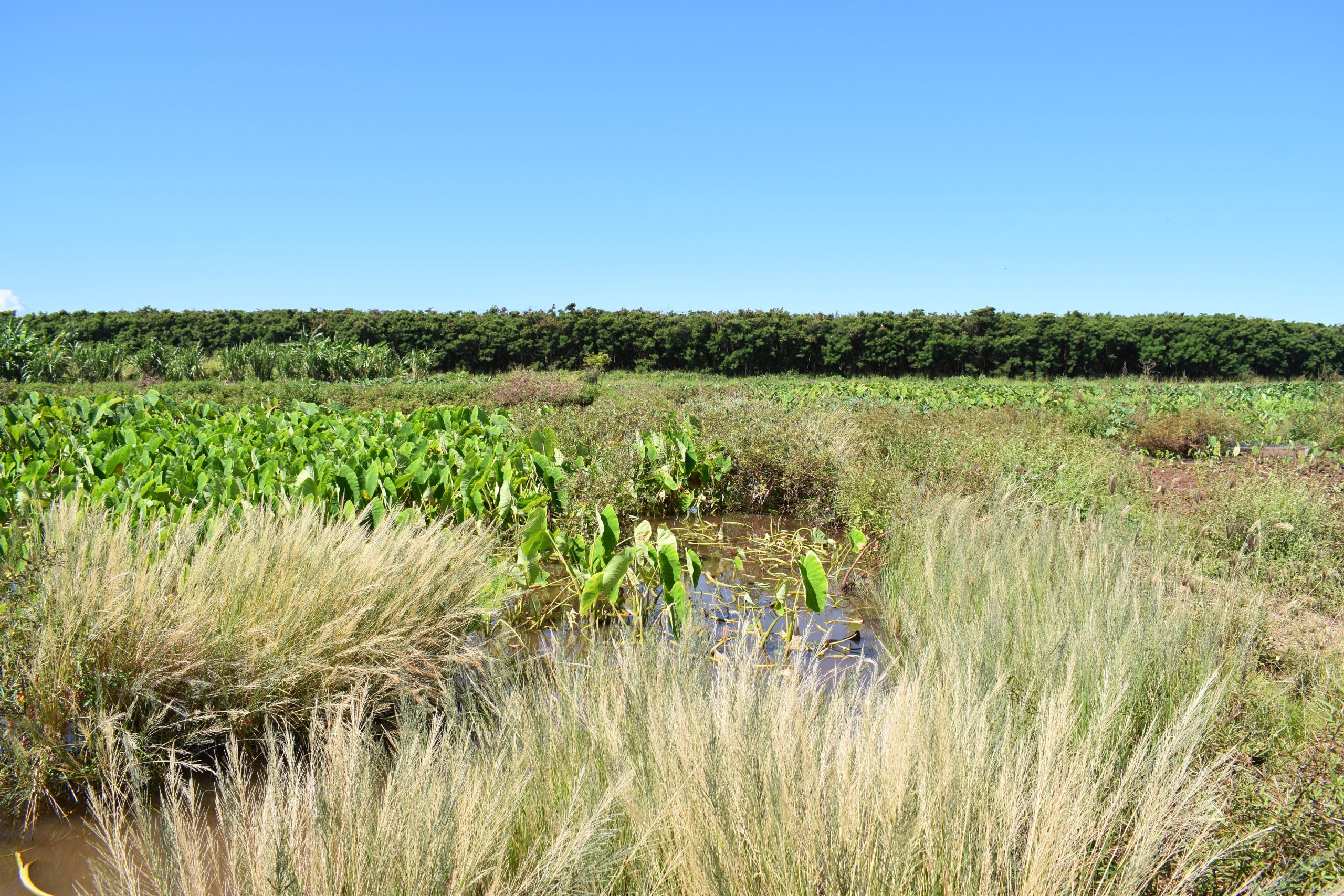
Corteva Agriscience uses its Field 107 to help incubate smaller farmers. It provides the land, water and fencing for free and helps farmers grade the land and do soil and leaf tissue analyses to see what fertilizers may be needed and to identify any plant diseases or pests. Above is Adam Asquith’s lo‘i kalo. | Noelle Fujii-Oride, Overstory
High Demand for Farmland
On Kaua‘i, ADC controls nearly 6,000 acres in Kālepa and about 12,000 acres in Kekaha. Gady said just under 13,000 of those acres are farmable with water access. Nearly 9,700 of those acres have licenses with farmers.
The unlicensed 3,200 acres will soon drop to “next to nothing,” Gady said, due to high demand. ADC opened the remainder of its land portfolio in 2023. Gady said the agency continued to receive applications for its Kaua‘i lands after the cutoff.
As a result, ADC is looking for more land to acquire. The state Legislature approved $1.3 million to acquire about 75 acres in Waimea and $39 million to acquire 1,000 acres in Kapaia from Grove Farm. Both are adjacent to existing ADC holdings.
Gady said the Grove Farm land is desirable because it’s close to the airport, the port and the island’s main population center. Half of those acres are currently being farmed by small, disadvantaged farmers growing diversified crops. The other 50% are not licensed because they don’t yet have adequate, consistent water access.
Grove Farm owns 38,000 acres of former sugar plantation land and is a major landlord for Kaua‘i farms. Fox said Mālama Kaua‘i has heard that Grove Farm plans to sell some of its Līhu‘e farmlands and has asked several farmers to relocate.
According to Kaua‘i County’s 2015 Līhu‘e Community Plan, land now used for farming by the airport and behind Wal-Mart—along Ahukini Road and Kapule Highway—is slated for redevelopment into the Wailani mixed-used community, which will have over 1,300 housing units. Grove Farm is also selling almost 300 acres of land mauka of Līhu‘e’s Isenberg Park to the state Department of Hawaiian Home Lands, according to the department’s website. The department plans to turn that acreage into 1,000 single-family homes and 100 subsistence agriculture lots.
Shawn Shimabukuro, a senior vice president at Grove Farm, wrote in an email that the company is relocating some of its agricultural tenants because of new, needed workforce housing in accordance with the Līhu‘e Community Plan and that it is ensuring that affected farmers have alternative land locations nearby, such as the 1,000 acres in Kapaia that Grove Farm plans to sell to ADC.
“Building communities is important to Grove Farm, which includes supporting local food production,” she wrote.
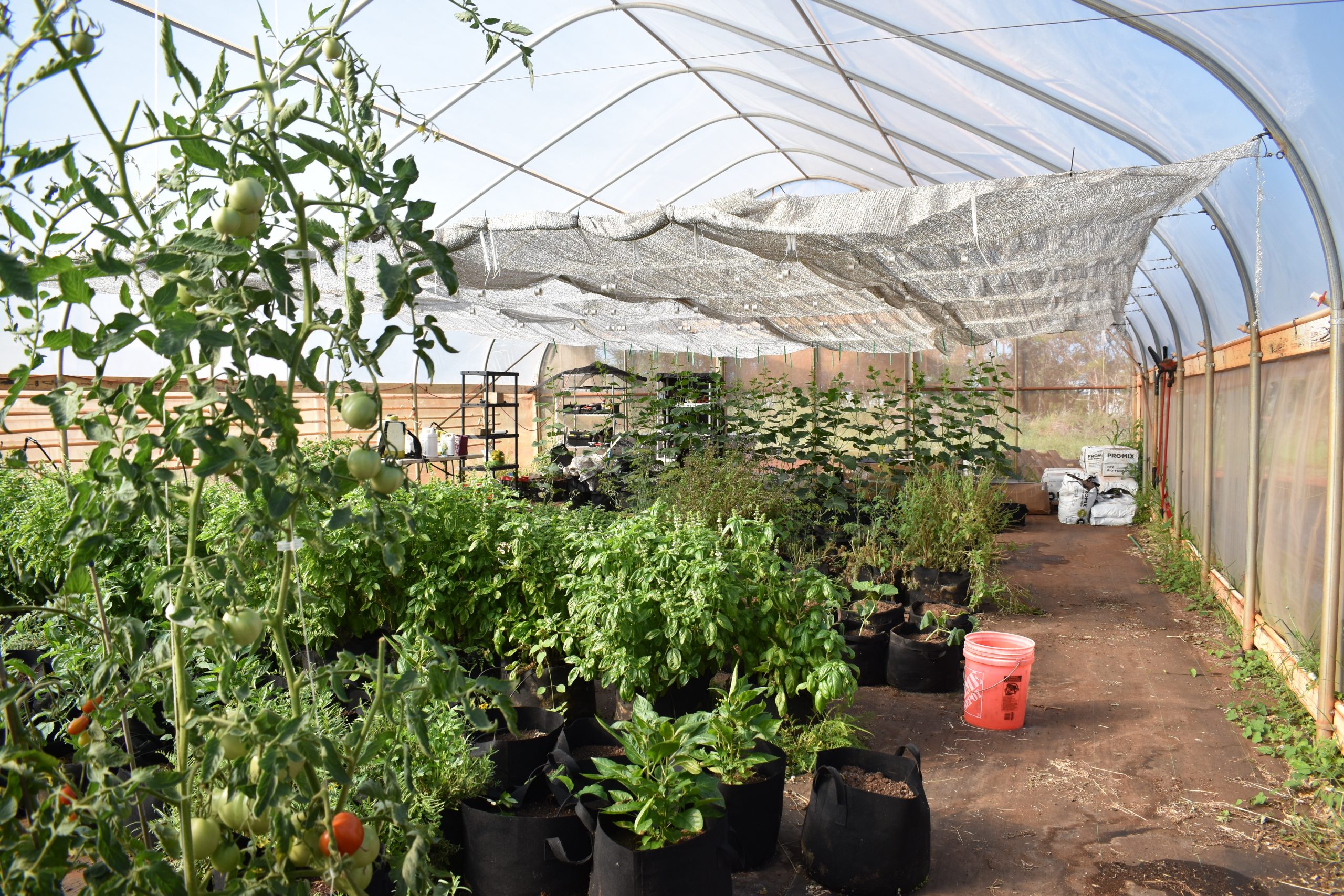
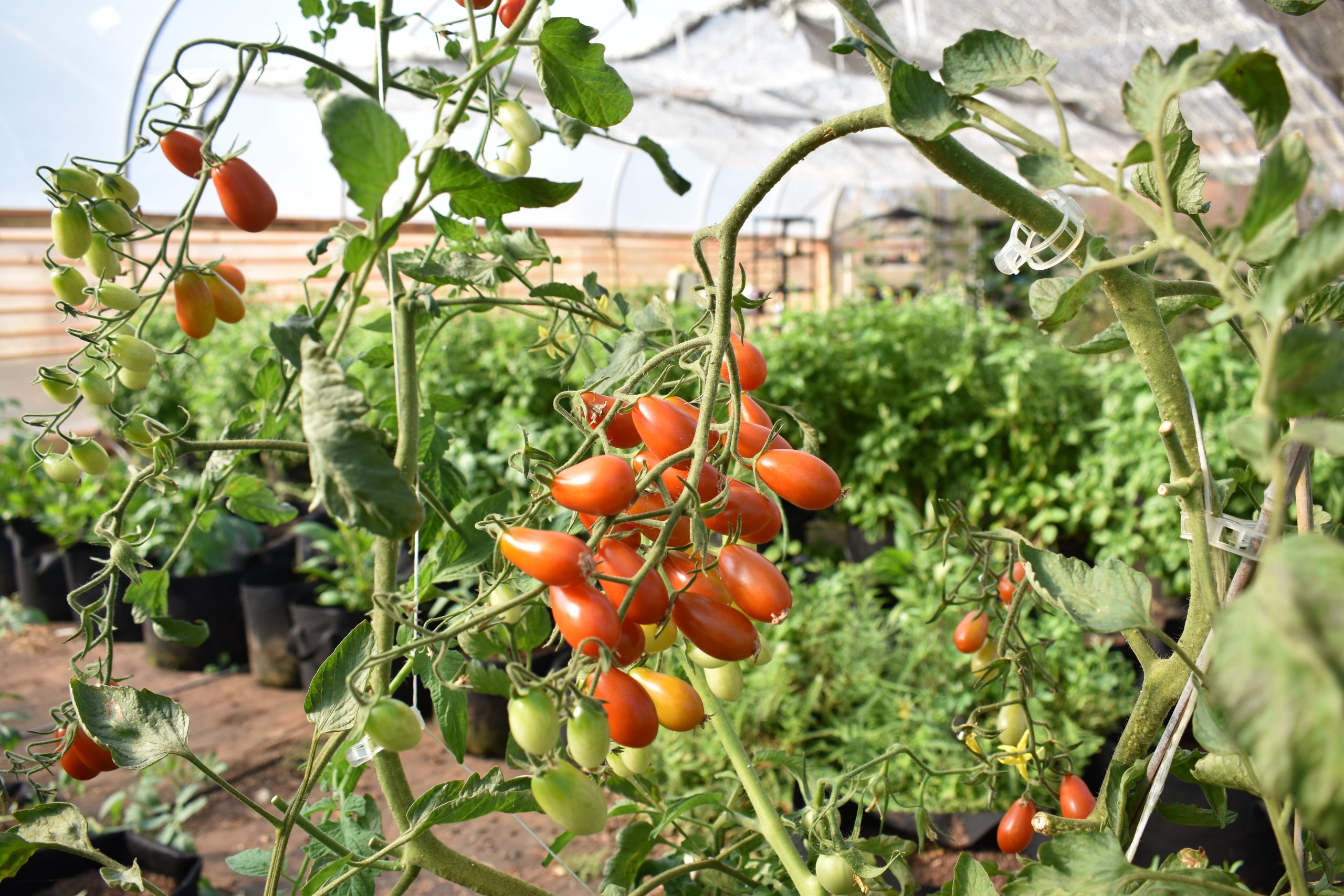
Independent farmers make use of Corteva’s shade houses in Waimea. Shown above is a shade house used by a recent GoFarm Hawai‘i graduate, who is growing crops like tomatoes, cucumbers, eggplants and basil. | Noelle Fujii-Oride, Overstory
Small Plots, Long Leases
With how tough finding land has been, Asquith believes the only viable path forward for farmers to have long-term security is through state lands. And he thinks ADC should look at adopting the agricultural park model—with small, affordable plots and long leases— to help smaller farmers.
“That would boost more food production faster and allow more farmers on the land than any other change to their existing program,” he said.
The County of Kaua‘i is looking at whether that type of model could work in its planned Waimea 400 development, said Niki Kunioka-Volz, agriculture economic development specialist for the County. The development’s conceptual plan includes affordable housing, community gardening space, a sports complex and agricultural space.
In the meantime, Mālama Kaua‘i just wrapped up a series of community meetings to help it determine how the Olohena ‘ĀINA Center can best serve the East Kaua‘i community.
The nonprofit’s timeline for opening the project’s first phase depends on how soon it can get water to the site. For now, it’s accelerating applications that don’t have a great need for water. Fox said the project has so far received 14 applications for a total of 76 acres of land, and the nonprofit continues to take applications.
“It’s been very cool to see what the community comes up with that they want to participate in, and make it really based on that community (feedback),” Fox said.